Continuous Learning at Scale
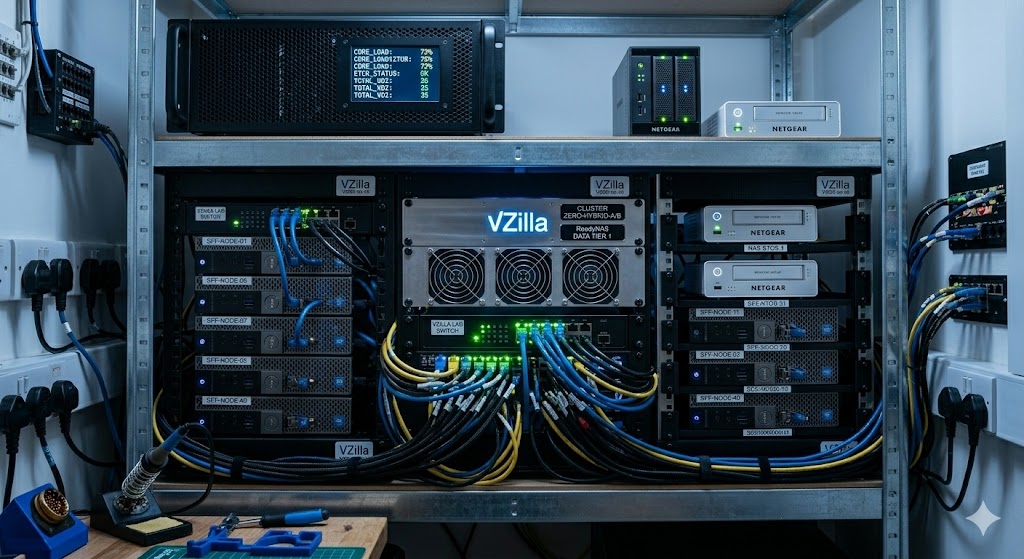 A home lab is far more than a collection of blinking lights and spinning fans in a spare room or closet. For me, it is the ultimate sandbox—a dedicated environment designed for breaking things, fixing them, and staying actively hands-on with enterprise-grade cloud-native infrastructure, data protection, and virtualization.
While public cloud environments and corporate labs have their place, they often come with financial guardrails or rigid stability requirements. A personal home lab provides the absolute freedom to tinker without boundaries.
Why Maintain a Home Lab? (The Benefits for Education)
If you are working in modern enterprise IT, a home lab is the single best investment you can make in your own technical growth. Here is why:
1. Safe Failure Modes
In a production or shared corporate lab, a misconfigured Container Network Interface (CNI) or a broken storage policy can halt work for entire teams. In the home lab, failure is the goal. Re-bootstrapping a broken cluster from the API layer teaches you how components actually interact under stress.
2. Bridging the Hypervisor & Container Divide
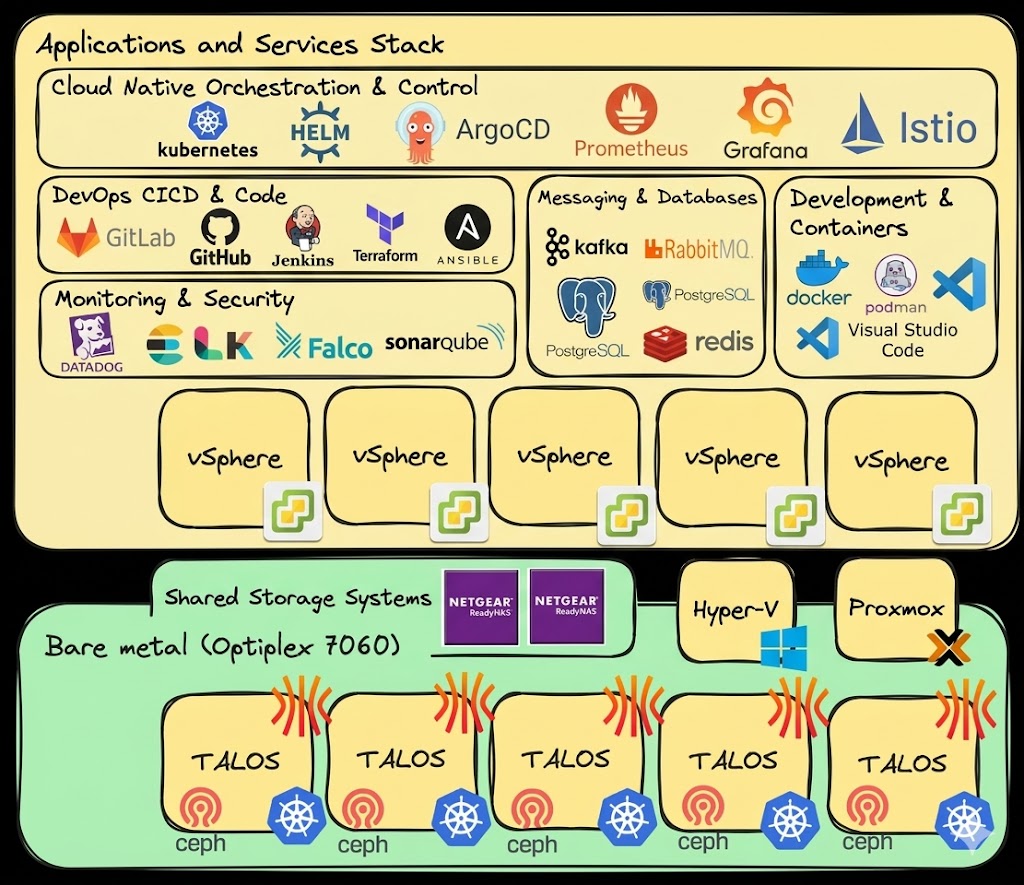
Modern infrastructure requires understanding how traditional virtualization coexists with cloud-native architectures. This environment allows for real-world testing of advanced patterns:
Running bare-metal Kubernetes distributions (like Talos Linux).
Exploring modern storage operators like Rook Ceph to provision cloud-native block storage.
Running virtual machines inside containers via KubeVirt to test nested, complex enterprise software deployments.
3. Validating Data Resilience & Security
You cannot truly understand data protection until you have built, broken, backed up, and restored a stateful application yourself. A home lab lets you simulate malicious drift, test configuration diffing on critical key-value stores like
The Lab Philosophy: If it hasn’t been broken and rebuilt at least twice, you haven’t actually learned how it works.